

Overview of developments in the lighting industry in the last five years (2020-2025)
1 Overall Industry and Market Landscape
In the past five years, the global lighting industry has experienced profound structural adjustment and transformation. Although the penetration rate of LED lighting continues to increase and has exceeded 80%, becoming the absolute dominant lighting technology, the overall growth rate of the industry has slowed down, and the market competition is becoming increasingly fierce. 2024 global LED lighting market size of about 53.573 billion U.S. dollars, but by the impact of increasing uncertainty in the global economic environment, corporate investment and business activities contraction, is expected to decline in the market size in 2025.
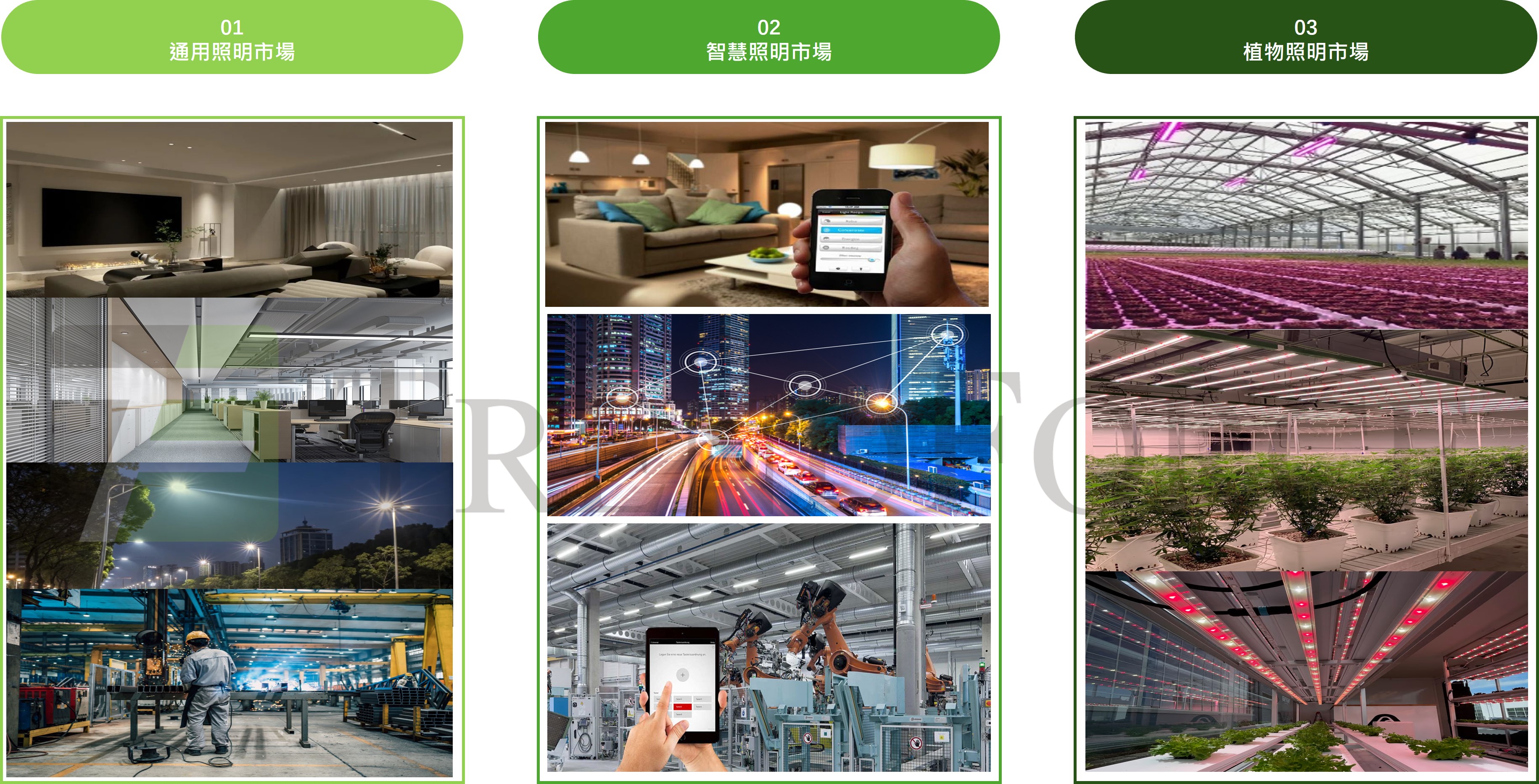
The industry shows a clear differentiation phenomenon: the traditional general lighting market continues to be under pressure, while intelligent lighting, human health lighting, plant lighting and other high value-added segments show strong growth momentum. This differentiation signifies that the industry has shifted from purely pursuing scale expansion to a new stage of competition centered on technology density and scenario value.
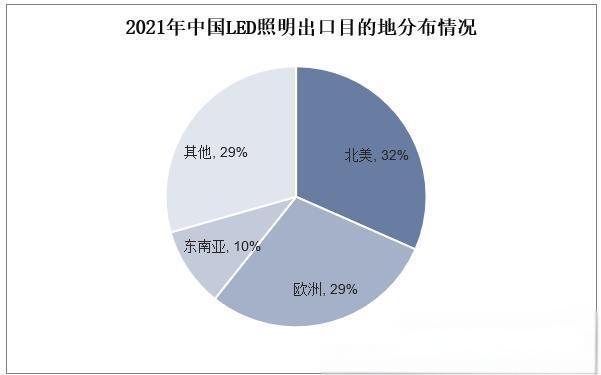
The performance of regional markets varies. The European market is driven by energy-saving regulations and the introduction of high-efficiency products to maintain strong growth; the North American market is affected by the tariff policy is more obvious; the Asian market is showing a recovery trend, of which the Chinese market has shown a strong resilience.
2 Technology development trend and innovation direction
2.1 Accelerated penetration of intelligent lighting
Intelligent lighting is an important engine of industry development in the last five years. Through the use of Internet of Things technology, wired/wireless communication technology, power carrier communication technology, embedded computer intelligent information processing and energy-saving control technology composed of distributed lighting control system, intelligent lighting realizes the intelligent control of lighting equipment.2025 global LED intelligent lighting market size is expected to reach 11.573 billion U.S. dollars, with a high annual growth rate of 19.2%.
Technology convergence continues to deepen: the convergence of AI algorithms, the introduction of a new generation of compatible protocols (e.g., Matter), and the decline in development costs have propelled the rapid introduction of smart lighting products to the market. Intelligent lighting systems can not only achieve dynamic dimming and color adjustment to meet users’ pursuit of human factors health lighting, but also achieve energy saving and emission reduction by optimizing energy consumption.
2.2 Health and the Rise of Human Factors Lighting
As an emerging segment, health lighting has shown strong growth in the last five years. These products simulate the sunlight spectrum, with 10,000 adjustable color temperatures and rich color variations, which can not only meet the main function lighting, but also support ambient mood lighting. Full-spectrum technology, biorhythm regulation and personalized lighting have become the main development direction of healthy lighting.
Elderly-friendly lighting has become a segmented scenario for companies to focus on. With the aging of the global population intensified, the elderly lighting market shows a development potential that can not be ignored, a number of companies have launched a special elderly lighting product line.
2.3 Steady development of plant lighting
The LED plant lighting market has maintained a steady growth in the last five years.The global LED plant lighting market size reached USD 1,315 million in 2024, a 6.6% year-on-year growth.It is projected to reach USD 1,366 million in 2025, at a CAGR of 3.9%.
In terms of product technology, dynamically controllable intelligent LED plant growth lights are gradually introduced into greenhouses and vertical farms and other applications, gradually becoming mainstream. The proportion of products equipped with 3 to 4 channels of adjustable spectra has increased, and they are deeply integrated with intelligent control systems to promote energy-saving and precision planting.
3 Product Design and Application Scenario Innovation
3.1 Product Design Innovation
Lighting product design in the last five years there have been significant changes. Many lamps and lanterns increased backlight and up and down light design, not only can increase the brightness of the space, but also to create an atmosphere, enhance the sense of space levels. Lighting fixtures with this type of design are mainly used for commercial and home ceiling lights and linear light products.
Minimalist style prevails, with ultra-thin design, hidden light source and integrated modeling. Material mix and match has become a highlight, combining metal, glass, ceramics and other materials to enhance the texture of the product. Color diversification is also becoming more and more obvious, expanding from the traditional black and white gray to Morandi and metallic colors.
3.2 Application Scenario Expansion
Lighting applications continue to diversify. Outdoor lighting, industrial lighting and emergency lighting and other areas with the opportunity to reconfigure the lighting products, led to a steady growth in shipments of LED street lights, LED patio lights and LED floodlights (Floodlight).
In the new installation market, driven by the Artificial Intelligence (AI) digital infrastructure construction boom, the demand for related lighting products has remained stable, of which shipments of products represented by LED linear lights (LED Light Strip) are expected to maintain steady growth. Segmented lighting markets with relatively high barriers, such as plant lighting, marine lighting and medical lighting, have become key application areas for companies to compete and penetrate.
4 Policy environment and sustainable development
4.1 Impact of policies and regulations
Over the past five years, policies and regulations have had a profound impact on the development of the lighting industry. The “double carbon” goal and green building policy has promoted the popularization of energy-saving products, such as the “Green Building Action Plan” explicitly requires public buildings to improve the energy efficiency of lighting by more than 20%. 2025 came into effect part of the mercury-containing lamps and lanterns phase-out treaty, although the short-term push up the cost of enterprise transformation, but accelerated the process of technological iteration.
International trade environment, with the global supply chain to China, global production capacity is still in the state of expansion, further intensifying the competition. 2025 more regions will LED lighting to join the tariff protection program, especially the United States tariff protection policy upgrade, inhibit the LED lighting market demand.
4.2 Trends in sustainable development
Sustainability is profoundly affecting the lighting industry. Green innovation has become a forward-thinking approach that combines environmentally friendly practices with advanced technology, driven by growing climate concerns, stringent environmental regulations, and consumer demand for sustainable solutions.
LED technology is leading the way in reducing energy consumption, with the International Energy Agency (IEA) predicting that LEDs will significantly reduce global electricity consumption by 2026, with the potential to reduce carbon emissions by billions of tons per year expected. The widespread use of solar lighting solutions in urban infrastructure projects further highlights the industry’s commitment to the use of renewable energy.
The principles of the circular economy are reshaping the way lighting products are manufactured. The use of recyclable and biodegradable materials that can help reduce the environmental footprint is on the rise in luminaires. For example, some manufacturers are incorporating eco-friendly materials such as bamboo and recycled metals into their designs, paving the way for a more sustainable future.
5 Industry Challenges and Future Opportunities
5.1 Main challenges faced
The lighting industry has faced multiple challenges in the last five years:
- Weak demand and price pressure: in the first half of 2025, LED general lighting industry did not recover as expected, the new installation market continues to be weak, the stock replacement market growth slowed down, the overall market size continues to contract. At the same time, lighting encapsulation LED prices accelerated decline, the terminal manufacturers stocking attitude is cautious, encapsulation plant order visibility is low, price downward pressure continues.
- Uncertainty in the international trade environment: The reciprocal tariff policy initiated by the United States in April 2025 has shrouded the international economic environment in high uncertainty. The North American market is more than 80% dependent on products made in mainland China, and tariff pressure has pushed up costs, with owners generally delaying procurement plans.
- Accelerated technology iteration: Enterprises need to continuously invest in R&D to maintain competitiveness, which puts higher demands on their technological accumulation and financial strength.
5.2 Future Directions and Opportunities
Despite the challenges, there are significant opportunities for growth in the lighting industry:
- Intelligent lighting continues to penetrate: with the decline in development costs, the introduction of a new generation of compatible protocols and the integration of AI algorithms, intelligent lighting products will become more popular. Smart home and smart city applications will become the main growth drivers.
- Huge potential in niche markets: plant lighting, marine lighting and medical lighting and other areas of high specialization and relatively large profit margins are the focus of future competition and penetration of enterprises.
- Technology integration and innovation: LED lighting and AI, IoT, sensors and other technologies are deeply integrated, creating more innovative application scenarios. Smart city construction is expected to promote the development of IoT outdoor lighting, creating new market space.
- Circular economy and sustainable development: environmentally friendly products and digital lighting solutions are receiving increasing attention. Companies can meet market demand by developing more energy-efficient and environmentally friendly products while fulfilling their social responsibilities.
6 Conclusion and outlook
Looking back at the past five years, the lighting industry has experienced a profound transformation from quantity to quality. Although the traditional general lighting market growth is weak, intelligent lighting, health lighting and plant lighting and other high value-added segments show vigor and resilience. Technological innovation, product differentiation application scenario expansion and sustainable development have become the core driving force of industry development.
Looking ahead, the lighting system will increasingly extend from single product to whole-house intelligence, and deeply integrate with smart city and low-altitude economy (e.g. drone lighting inspection). Zero-carbon factory certification, light health certification has become the new standard for brand competition, UV LED sterilization technology or become the next wind.
Enterprises need to balance the domestic consumption upgrade and overseas market expansion, through the “technology + culture ” output (such as the new Chinese design overseas) to build brand barriers. Although the industry is still facing pressure and challenges in the short term, the long-term development prospects are still bright. Accurately grasp the market trend, increase technological innovation, optimize product structure, improve service quality of enterprises will stand out in the future market competition.