


In-depth analysis of lighting industry development trends over the next five years (2024-2029)
Lighting, this once “light up the darkness” as the only mission of the ancient industry, in the wave of technology and the needs of the times together, is experiencing an unprecedented profound change. The next five years, will be the lighting industry from the “functionality” to “intelligent”, “digital” and “humane “The key stage. Industry boundaries are becoming increasingly blurred, the core of product value from the “lamps” itself to “light” carried by the data, experience and service. The following will be from six dynamic dimensions, in-depth analysis of the future of the lighting industry.
I. Intelligent Internet and Internet of Things (IoT) in-depth integration: from “people control the light” to “light moves with the environment”.
Intelligent lighting has gone beyond simple cell phone APP control or voice switching, and its future lies in serving as the nerve endings of the Internet of Things, seamlessly integrating into the body of the building and the city, and realizing the closed loop of sensing, computing and execution.
- Platformization and ecosystem competition: Intelligence of single product will lose competitiveness. The competition of the future is ecosystem competition. A company may provide a complete solution including sensors, gateways, cloud platforms and software interfaces, allowing third-party developers and integrators to build rich application scenarios on this basis. Home lighting will be linked with smart home appliances and security systems; commercial lighting will become a core component of building automation (BAS); and city lighting will work closely with traffic management and public safety networks.
- Sensorless Intelligent Interaction: Deliberate manual control will be drastically reduced and replaced by “sensorless intelligence”. Through a distributed network of sensors (e.g. presence sensing, light sensing, temperature and humidity sensing, or even millimeter wave radar), the system can automatically sense changes in the environment and human behavior. Lights will automatically adjust brightness and color temperature to supplement natural light, automatically turn off lights after people leave, and trigger emergency lighting and alarms when an emergency is detected. Light, will become a quiet, adaptive, always-on environmental service.
- Location Services (Li-Fi and Indoor Positioning): Although visible light communication (Li-Fi) technology is not yet commercially available on a large scale, it has great potential for accurate indoor positioning. In the next five years, sub-meter indoor navigation through lighting systems will no longer be a concept in high-end commercial bodies, museums, hospitals, warehouses and other scenes. Customers can get accurate store navigation in shopping malls, hospitals can track the location of medical equipment in real time, and warehouse management systems can optimize picking paths, all supported by a network of luminaires on the ceiling.
Second, Human-Centric Lighting (HCL) has become the core of value: from “lighting up the space” to “caring for health”.
As people’s health and well-being of the degree of importance of the unprecedented increase in light on the human body’s physiological rhythms (circadian rhythm) of the impact has become a scientific consensus. Human factors lighting will move from high-end concepts to mainstream applications, becoming the key to product premiums.
- Rhythmic Lighting Popularization: Future lighting systems will no longer be static, but will dynamically simulate the changing trajectory of natural light. Early in the morning, the light color is cool and bright to help people wake up physically and mentally; in the afternoon, the light is full and neutral to ensure work efficiency; in the evening, the light color turns warm and dim to promote melatonin secretion and prepare for sleep. This will fully penetrate in office, education, medical, pension and home scenarios, and become an important means to enhance employee efficiency, student learning concentration, patient recovery speed and the quality of life of the elderly.
- Integration with health management: Lighting will open up data with wearable devices and health management platforms. A company’s system may be able to provide a more targeted wake-up light program in the morning based on the user’s sleep data; or combine with the hospital’s diagnostic and treatment system to provide Alzheimer’s patients with a specific light therapy program to alleviate symptoms. Light, as a non-invasive means of treatment and intervention, will be incorporated into the large health industry system.
- Personalized Lighting Experience: Based on big data and machine learning, the system can learn different user preferences and behavioral patterns to provide a highly personalized lighting environment. In an open office, the lighting in each workstation can be independently adjusted according to the individual needs of employees; in a home environment, each member of the family can have their own “light environment profile”.
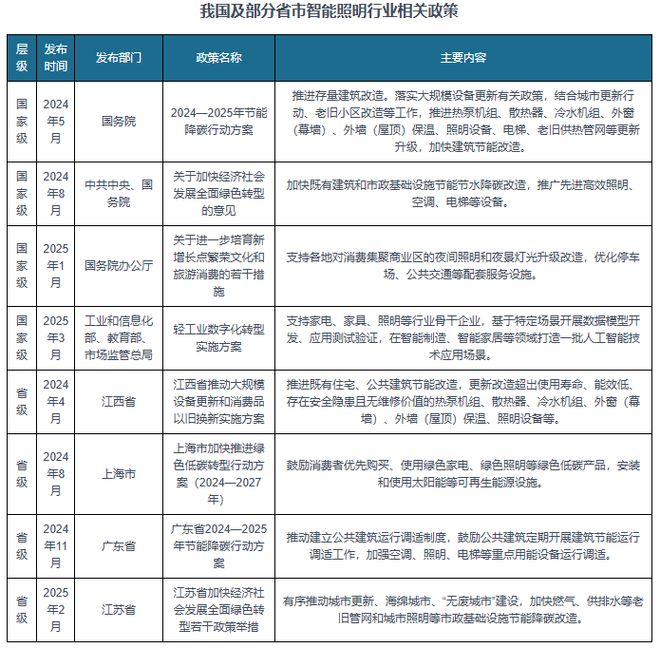
III. Sustainable development and the circular economy: from “green products” to “full life-cycle greening”
The global push towards “dual carbon” goals has made sustainability an option for companies. The competition of the future is not only about performance and cost, but also about carbon footprint.
- Ultra-high efficiency and ultra-long life: The efficiency (lm/W) of LED technology is still improving, and in the next five years, devices based on new materials (e.g., gallium nitride on GaN) and new structures (e.g., COB, MIP) will drive the luminous efficacy to a new level. At the same time, by optimizing thermal management, drive power and optical design, product life will be further extended, significantly reducing the frequency of replacement and total energy consumption over the life cycle.
- Material innovation and recyclable design: A company will focus more on the use of renewable and recyclable materials, and consider the dismantling, repairability and recyclability of products from the design end. For example, a modular design will be used so that a component (such as a power supply or LED module) can be replaced individually when it is damaged, rather than discarding the entire lamp. Reduce the use of glue bonding and increase the snap-on design for easy disassembly and recycling.
- Carbon Footprint Transparency and Digital Passports: Consumers and purchasers will require companies to provide full life-cycle carbon footprint assessments of their products. Markets such as the EU are likely to implement “digital product passports” (DPP), which require products to disclose their material composition, carbon footprint, recycling information, and so on. This will force the entire industrial chain, from raw material extraction, component manufacturing to logistics and transportation, to achieve data transparency and low-carbonization.
IV. The interface between light and the digital twin, the metaverse: from “physical illumination” to “digital imaging”
The application of digital twin (Digital Twin) technology in the field of smart cities and intelligent buildings has opened up a new value space for the lighting industry. As widely distributed nodes in the physical world, lamps and lanterns have become the indispensable data collection end and instruction execution end for building the Digital Twin world.
- As a data collection front-end: Smart luminaires are equipped with sensors that can collect a large amount of environmental data (light levels, foot traffic, temperature, space utilization, etc.). This data is synchronized in real time to the digital twin model of the building, enabling managers to gain visual insights into the state of space usage, energy consumption, and to make optimized decisions based on the data, such as optimizing lighting strategies, adjusting air conditioning and ventilation, and re-planning the layout of the space.
- Accurate predictive maintenance: By analyzing the working status of the lamps, light decay data and failure warnings, the system can send out maintenance reminders before the real failure of the lamps and accurately locate the specific lamps, thus transforming the traditional mode of “repairing when broken” into “predictive maintenance”, greatly reducing operation and maintenance costs and manpower time. This will change the traditional “repair when broken” mode to “predictive maintenance”, greatly reducing operation and maintenance costs and labor and time.
- Intersection of Virtual and Reality (Metaverse): Lighting will be combined with AR/VR technology in areas such as cultural tourism and retail. Through precisely controlled projection lighting and dynamic lighting, virtual information can be superimposed on physical space to create an immersive narrative experience. For example, in museums, lighting can guide visitors’ eyes and display the historical scenes behind the artifacts with AR glasses; in brand flagship stores, light shows are combined with virtual try-on to create a stunning consumer experience.
V. Technology integration and miniaturization, invisibility: from “see the light, see the light” to “see the light, do not see the light”
Consumers and designers are increasingly looking for minimalism and purity in space, wanting the light itself to be the focal point of the vision and the fixtures to be hidden or integrated with the architecture and furniture as much as possible.
- Architectural Integration: In the next five years, lighting will be more deeply integrated into building materials. Linear light and magnetic systems will become basic configurations. On the cutting edge, illuminated ceilings, illuminated walls, and even illuminated glass will become part of the space, providing uniform, glare-free illumination when needed, while remaining indistinguishable from architectural surfaces. A company will be more collaborative with building material vendors, designers and real estate developers on the front end of the design process.
- Micro-LED and Microdisplay Technology: The maturation of Micro-LED technology will be disruptive. Its pixel points are as small as microns, allowing the luminaire to be a high-definition display at the same time. Future car windows, glass curtain walls, and home mirrors may all become potential display and lighting interfaces, realizing seamless switching between dynamic information display and ambient lighting.
- Flexibility and customizable forms: Lighting products based on OLED and flexible PCB technology will be more abundant, able to bend, fold, and fit a variety of shaped surfaces, providing designers with unprecedented creative freedom and realizing the true meaning of “design-driven”.
VI. Business model innovation: from “selling products” to “selling services”
Increased product homogenization and competitive pricing pressures will drive leading companies to transform from hardware manufacturers to solution and service providers.
- ” Lighting as a Service (LaaS): This model will be further popularized. Instead of purchasing luminaires, the customer buys a “lighting service” (e.g. agreed illuminance levels, energy saving targets, operation and maintenance response time). A company is responsible for designing, installing, maintaining and updating the entire system, and the customer pays for the service on a monthly or annual basis. This eliminates the upfront investment pressure on the user, while giving the service provider the incentive to provide the most energy-efficient and reliable products for long-term profitability – a win-win situation.
- Value-added data services: For enterprises, the anonymized data collected through the intelligent lighting system has great value in itself. An enterprise can provide shopping malls with heat maps of foot traffic and dwell time analysis in different areas to help them optimize store layout and marketing strategies; and provide office building managers with space utilization reports to help them make efficient use of real estate resources. Data will become a new source of revenue.
- Subscription-based software services: Advanced features, such as advanced scenario configuration, data analytics panels, and deep integration interfaces with third-party systems, may be charged on a software subscription (SaaS) model. Hardware may tend to be affordable or even free, but the value of software and eco-services will continue to increase.
Summarizing the outlook
The lighting industry in the next five years will no longer be an isolated physical industry, but a composite ecosystem integrating electronics, communications, software, health, materials and design. The core driving force for its development will come from the four engines of intelligent integration, health value mining, sustainability requirements and digital world convergence.
Successful companies will no longer be mere “light makers”, but “shapers of light environment experience”, “providers of healthy light life” and “contributors to smart city data services”. Contributor of smart city data services”. For industry participants, it is necessary to take an unprecedented open stance, actively cooperate with cross-industry partners, and increase investment in software, data analysis and ecosystem construction in order to light up their own future in this dramatic change.