
Media Report
-
Quality and Longevity: The Shift to Performance and Reliability
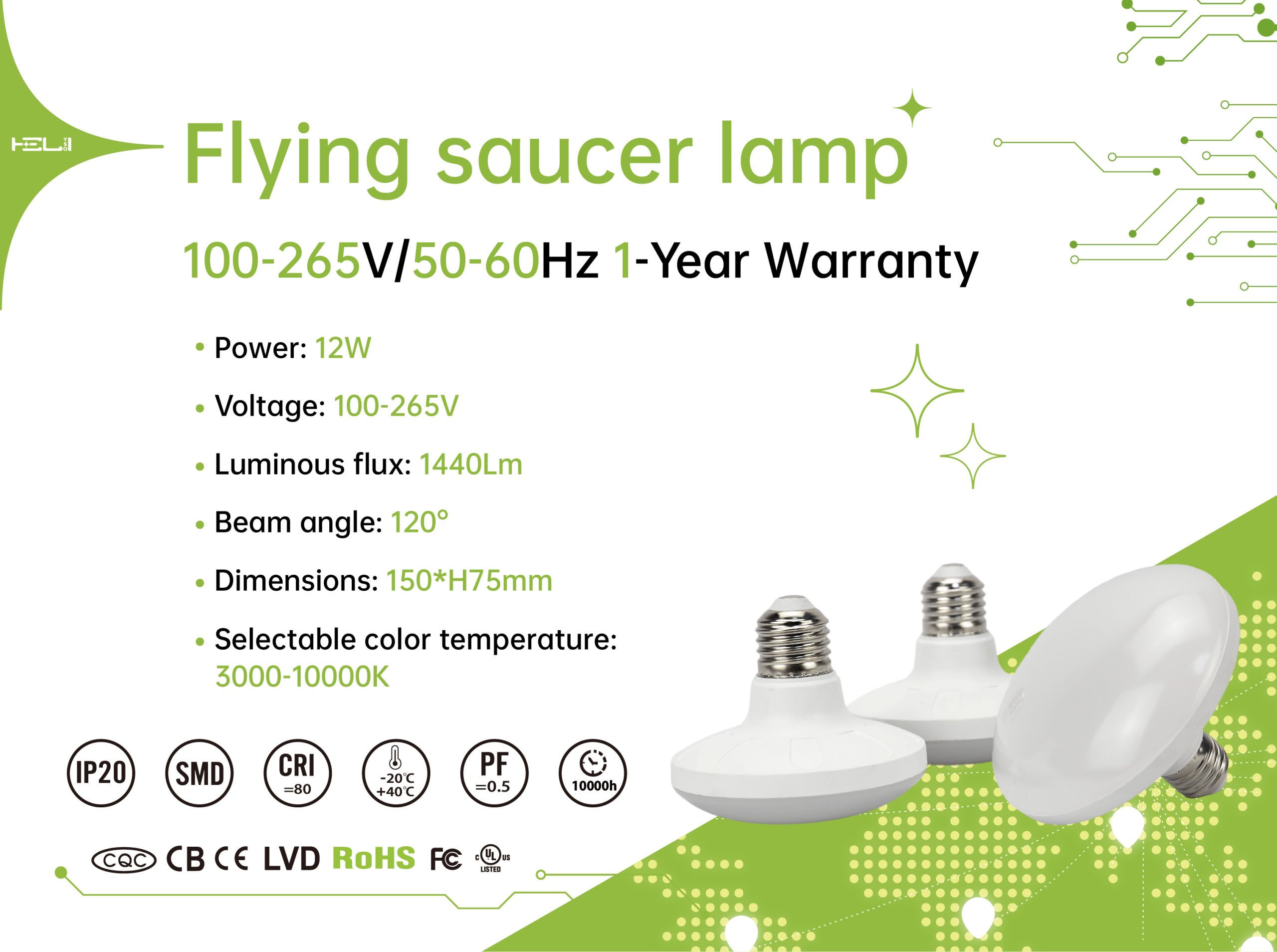
As the market matures, competition is moving from initial price to total cost of ownership and quality. Specifiers and buyers are scrutinizing parameters beyond lumens-per-watt, such as color consistency over time, flicker performance, driver reliability, and warranty terms. The industry is focusing on robustness: designing for thermal management to ensure long lifespans, using higher-grade components,
-
The Miniaturization Trend: Invisible and Seamless Lighting
A dominant aesthetic trend is the pursuit of invisibility—lighting that is seen only by its effect. This drives demand for ultra-miniaturized LED profiles, thin linear strips, and fixtures with vanishingly small bezels. Recessed downlights are now as small as 1-inch in aperture. Covelights and slot details hide light sources completely, creating a seamless glow that
-
Bidirectional Lighting: A Potential Player in the Smart Grid
Research is exploring the concept of “bidirectional lighting,” where LED fixtures, which are inherently solid-state electronics, could serve dual purposes. Beyond illumination, they could act as wireless communication nodes or even as distributed energy resources. Theoretically, with the right circuitry, a building’s vast network of LED drivers could potentially provide grid services like demand response
-
Circadian Lighting Expands into Education and Senior Living
Following early adoption in corporate offices, circadian or tunable lighting systems are finding strong use cases in schools and senior care facilities. Studies suggest that aligning light in classrooms with students’ natural rhythms can improve alertness, mood, and academic performance. Systems can provide cool, bright light in the morning to aid concentration and transition to
-
Optics Innovation: Shaping Light with Greater Precision
While LEDs are the light source, optics determine how that light is distributed. Innovations in optical design are crucial for visual comfort and efficiency. Advanced micro-optical arrays, total internal reflection lenses, and free-form optics allow manufacturers to create luminaires with extremely precise beam control, minimizing glare and “spill light.” This is vital for applications like
-
Lighting as a Service: A New Business Model Emerges
The “Lighting as a Service” model is disrupting traditional capital expenditure approaches. Under LaaS, a provider installs, maintains, and updates a lighting system for a monthly or annual fee, while the client pays for the light, not the hardware. This removes upfront costs, transfers technology risk to the provider, and guarantees performance and energy savings.
-
Professional Lighting Design Gains Recognition as a Critical Discipline
As lighting becomes more complex and integral to wellbeing and sustainability, the role of the professional lighting designer is gaining prominence. These specialists bridge the gap between architects, engineers, and end-users. They are experts in photometrics, human factors, controls, and aesthetics. Their work goes beyond selecting fixtures; they craft lighting concepts, perform detailed calculations to
-
The Rise of Outdoor Residential Lighting Systems
Outdoor residential lighting is evolving from simple porch lights and path markers into comprehensive integrated systems. Homeowners are investing in professionally installed systems featuring architectural façade lighting, landscape accent lighting, and functional security lighting, all controlled from a single app. These systems enhance curb appeal, extend living spaces into gardens and patios after dark, and
-
Heritage and Retrofit: Blazing Old Fixtures with New Technology
A significant market challenge is upgrading historically significant or architecturally cherished buildings with modern lighting. Simply replacing ornate chandeliers or vintage sconces with standard LEDs is often unacceptable. The retrofit market has responded with ingenious solutions. These include custom-designed LED “lamps” that mimic the exact shape and filament appearance of antique incandescents, low-profile driver modules
-
Standardization Wars: The Battle for Dominance in Smart Lighting Protocols
The smart lighting market suffers from fragmentation, with multiple wireless protocols vying for dominance. Zigbee, Z-Wave, Bluetooth Mesh, Wi-Fi, and proprietary systems all compete, creating confusion for consumers and complicating integration for professionals. The emergence of Matter, a unified, IP-based connectivity standard backed by major tech and lighting companies, promises to solve this. It aims to
-
Lighting for Vertical Farming: Tailoring Spectra for Optimal Growth
Controlled Environment Agriculture, especially vertical farming, relies entirely on artificial light. This has created a specialized and rapidly growing niche for the lighting industry. Grow lights are no longer just about providing high-intensity PAR; they are about spectral tuning. Research is optimizing precise light recipes—specific combinations of blue, red, far-red, and other wavelengths—to influence plant
-
The Software Layer Becomes a Lighting Differentiator
As hardware becomes increasingly commoditized, the value in lighting systems is migrating to software. User-friendly applications for commissioning, monitoring, and managing lighting networks are now a primary selling point. These platforms allow facility managers to visualize energy use, receive proactive maintenance alerts, and adjust lighting scenarios across a portfolio of buildings from a single dashboard.
